Motorcycle Telemetry Analysis for Track, Suspension and Handling Modeling
Problem
When the new season began, our team grew and we incorporated the Simulink model from the Electronics Division. This brought electric, thermal, motor, and battery-management effects into the VI-Grade simulation environment. The model became more realistic but also slower, because the added physical constraints slightly reduced the virtual bike’s performance.
To recover accuracy, the Vehicle Dynamics division needed to rebuild and refine the suspension, tire, and track models, all of which had been only partially validated the previous year. This required a systematic approach to telemetry analysis, road-profile reconstruction, and dynamic behavior tuning.
Approach
With a larger team of five new members, I took the lead in reorganizing the workflow. I began by training everyone on VI-Grade and guiding part of the group through re-checking suspensions using datasheets and basic dynamic tests (acceleration, braking, slalom).
Meanwhile, I focused on completely redefining the tire model: the previous version had an overly polygonal force–slip shape, so I replaced it with a smoother, physically coherent base model adapted specifically to our motorcycle.
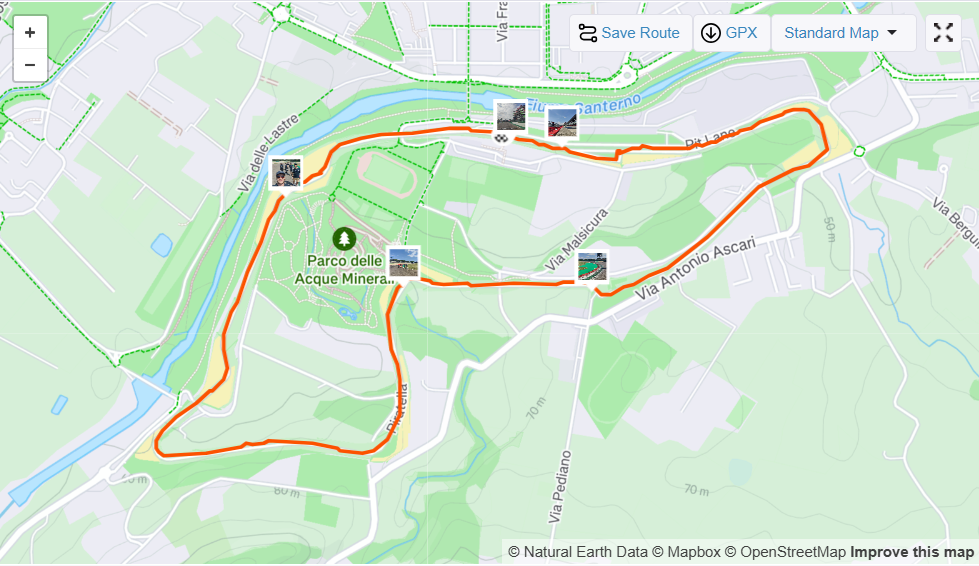
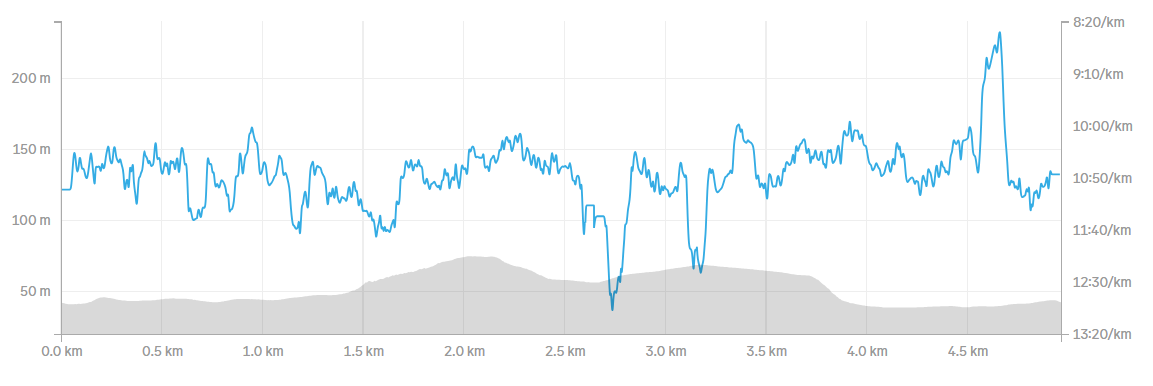
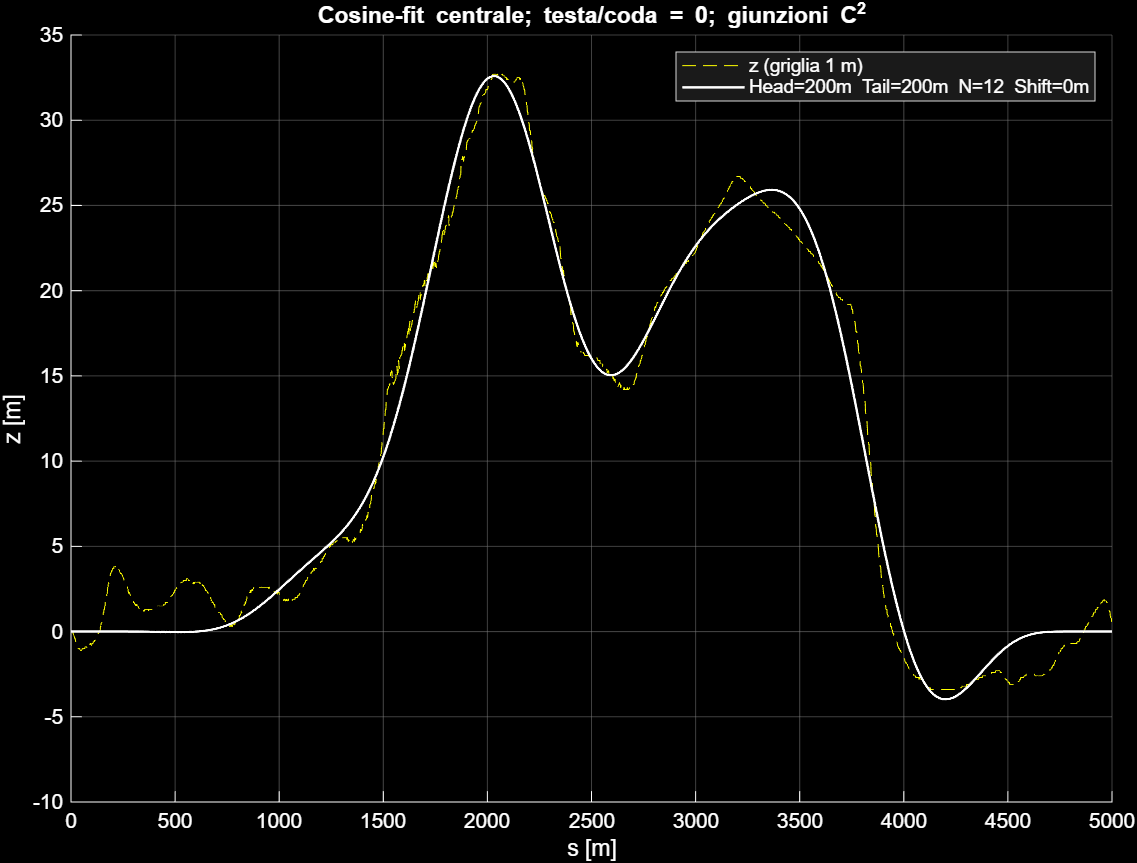
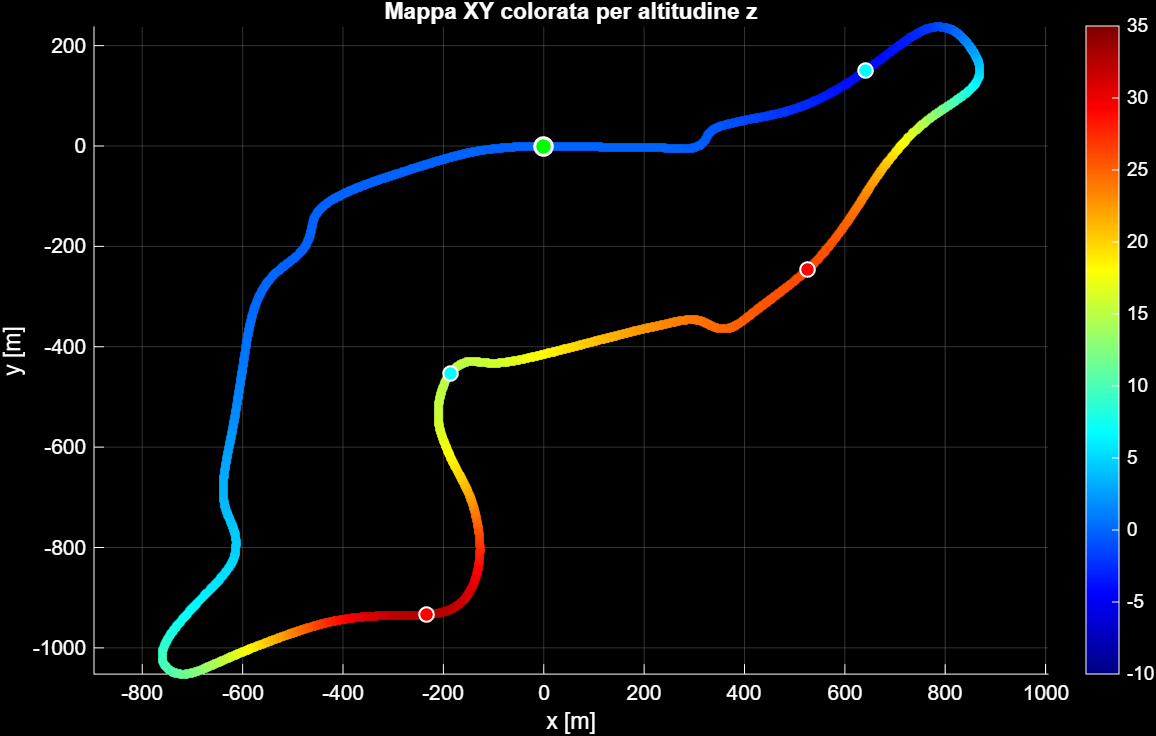
The most demanding task was rebuilding the tracks. I developed a complete MATLAB pipeline to convert GPS telemetry into usable VI-Road profiles, filtering noise through Fourier analysis and moving-mean techniques while preserving the real geometry. Once the tools were ready, the team validated the new models against the previous year's test data and iteratively improved the correlation between real laps and simulation.
Solution
The refined suspension, tire, and track models produced a simulation that was sometimes up to one second faster than the real bike – a huge margin in motorsport. This allowed us to retune the VI-Grade virtual rider controller to match the real rider’s style and to support setup decisions before going on track.
Using the improved model, we could evaluate transmission ratios, fork position and angle, rear-rod length, expected tire wear, and general handling predictions before testing on track. The updated simulation became one of the pillars of the team’s vehicle-dynamics workflow and directly contributed to faster optimisation cycles.
Insight 💡
My guiding principle was that a simulation doesn’t need to perfectly mirror reality – it needs to match or outperform real behavior to become a useful predictive tool. Since every model is a simplification, small deviations from real-world parameters were acceptable if they improved performance fidelity. This mindset helped the team be more pragmatic, more results-oriented, and more confident in using the simulation as a decision-making instrument.